
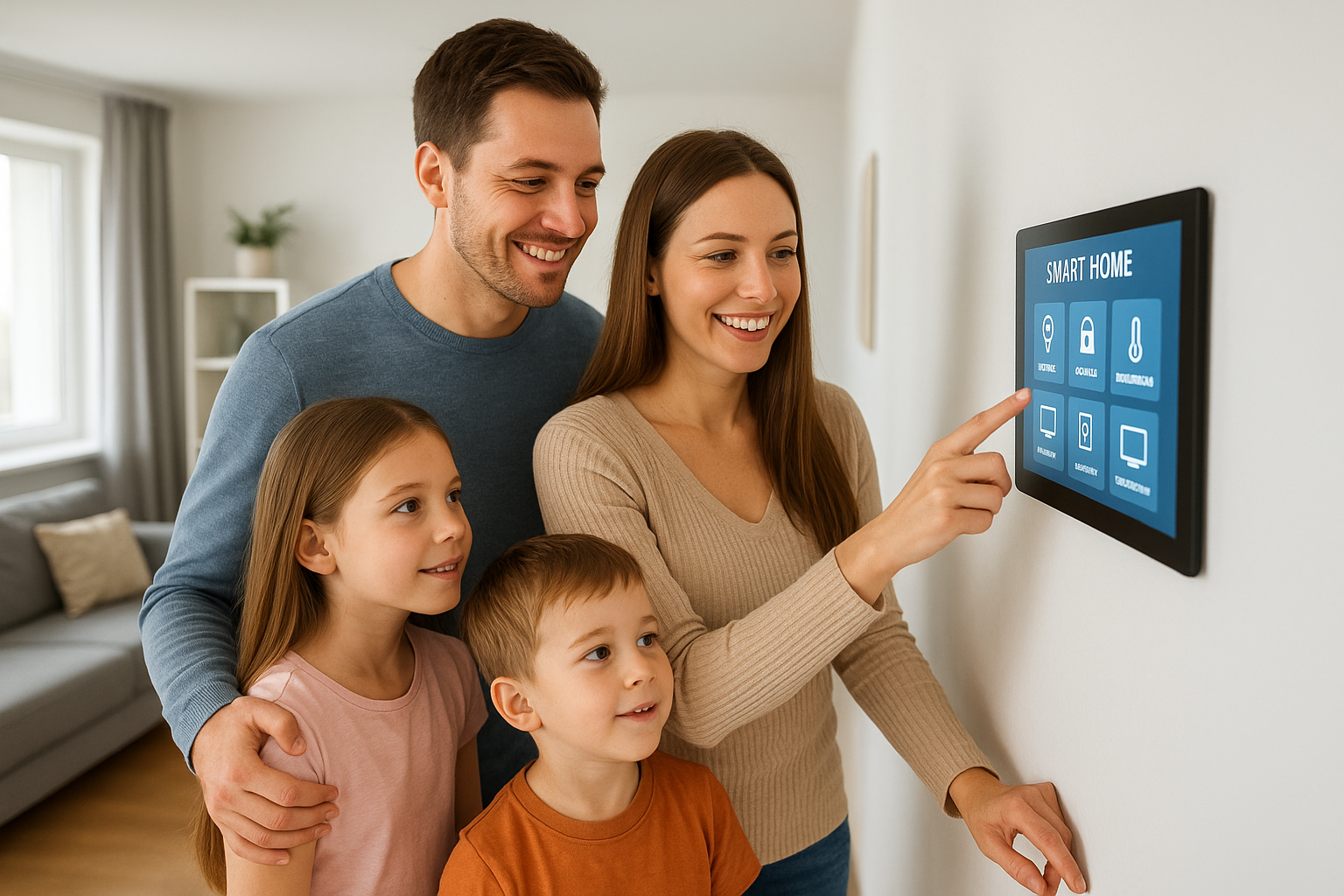
Smart Home Automation in India – Complete IoT Solutions for Modern Living

Introduction: The Era of Smart Living
In the past, a home was defined by its walls, furniture, and basic utilities. Today, technology has transformed that definition. A smart home is no longer a dream—it’s becoming a standard for modern living, especially in India. Automation is making our lives better. It provides comfort, safety, and efficiency. This includes smart switches, lights, IoT security systems, and appliances.
At Axera, we believe in The Art of Smart Living. Our mission is to make luxury automation accessible to Indian homes. This guide covers all you need to know about smart home automation in India. It includes its meaning, benefits, devices, design, challenges, and future.
What Is Smart Home Automation?
Smart home automation means using IoT-enabled devices to control, monitor, and optimize your home’s systems. These devices can be managed via smartphones, voice assistants, or central panels, making your home more interactive.
How It Works
-
Sensors & Controllers → detect conditions like light, temperature, or motion.
-
IoT Network → connects devices via Wi-Fi, Zigbee, or Bluetooth.
-
Automation Logic → pre-programmed commands (e.g., “turn off lights when leaving home”).
-
User Interface → smartphone apps, voice commands, or smart switchboards.
Imagine entering your home. Lights turn on by themselves. The AC adjusts to your favorite temperature. Your smart speaker plays your favorite playlist. That’s automation in action.
The Role of IoT in Smart Homes
The Internet of Things (IoT) is the foundation of smart homes.
-
Connectivity: Devices communicate with each other.
-
Interoperability: A smart lock can send signals to lights or alarms.
-
Remote Access: Control your home from anywhere in the world.
-
Data-Driven Living: Devices collect data for energy savings and security alerts.
With 5G expansion, affordable IoT devices, and smartphone penetration, Indian households are adopting smart living faster than ever.
Why Smart Home Automation in India Is Rising
India is at a turning point where technology meets lifestyle needs:
-
Increasing demand for luxury and convenience.
-
Availability of affordable smart devices and switches.
-
Growing concerns around security in urban areas.
-
Government push for smart cities and digital India.
-
Popularity of voice assistants like Alexa, Google Home, and Siri.
This makes it the perfect time for homeowners to embrace automation.
Types of Smart Home Devices
Smart Switches & Switchboards
-
Replace traditional switches with modern touch panels.
-
App and voice control for lights and appliances.
-
Features like dimming, scheduling, and scene creation.
Smart Lighting
-
LED-based, energy-efficient, and color-tunable.
-
Create mood lighting for different occasions.
-
Automated schedules reduce energy wastage.
Smart Locks for Home
-
Fingerprint, PIN, RFID, or smartphone-based access.
-
Keyless entry improves security.
-
Sends real-time notifications when accessed.
Smart Locker for Home
-
IoT-powered lockers for valuables.
-
Multi-layer security with alarms.
-
Remote monitoring capability.
Smart Home Security Cameras
-
AI-enabled surveillance with motion detection.
-
Cloud storage for video recording.
-
Accessible from anywhere via app.
Smart Appliances
-
IoT-enabled refrigerators, washing machines, ACs, and ovens.
-
Remote operation via apps.
-
Integration with energy-saving modes.
Smart Climate Control
-
Smart thermostats that maintain optimal comfort.
-
Air-quality monitoring systems.
-
Energy efficiency through intelligent adjustments.
Smart Clock for Home
-
Alarm clocks connected to lights and curtains.
-
Natural light simulation for better wake-up routines.
Advantages of Smart Home Automation
-
Convenience: Control everything from one app.
-
Energy Efficiency: Automated lighting and AC save electricity.
-
Security: Cameras, locks, and alarms offer peace of mind.
-
Luxury & Comfort: Voice commands and touch controls add sophistication.
-
Customization: Routines like “Good Night Mode” enhance daily living.
-
Accessibility: Elderly and disabled residents benefit from automation.
Disadvantages of Smart Homes
-
Higher Initial Cost: Investment is needed upfront.
-
Internet Dependency: Some devices won’t work without Wi-Fi.
-
Learning Curve: Not all family members adapt quickly.
-
Cybersecurity Risks: Vulnerable IoT devices may be targeted.
At Axera, we focus on secure, user-friendly, and future-ready solutions to address these challenges.
Smart Home Design & Lifestyle
Automation goes beyond devices—it redefines interior design.
-
Aesthetic Switchboards: Sleek and modern touch panels.
-
Mood Lighting: Adjust ambiance instantly.
-
Minimal Interiors: Clean look with fewer physical switches.
-
Luxury Appeal: Technology adds to the premium lifestyle experience.
Axera provides consultation services to ensure automation blends with design.
Smart Home Security in India
Security is one of the strongest reasons people upgrade to smart homes:
-
Cloud-based CCTV storage.
-
Smart locks and lockers with biometric access.
-
Motion sensors and AI-based alarms.
-
Instant notifications for real-time awareness.
This is especially important in Indian cities where nuclear families value remote monitoring.
IoT-Based Smart Home Automation Approaches
-
Standalone Devices: Independent bulbs or plugs.
-
Hub-Based Systems: One central device to control all.
-
Cloud-Connected Systems: Global access via mobile apps.
-
Voice Assistant Integration: Compatible with Alexa, Google, and Siri.
Future of Smart Homes in India
-
AI-based systems that predict habits and act accordingly.
-
Solar-powered homes with IoT energy monitoring.
-
Affordable devices making automation more mainstream.
-
Integration with smart city projects.
Axera ensures your home stays future-ready as new technologies emerge.
Smart Home Products in India
Indian households can access a wide range of products, including:
-
Smart switches and touch panels.
-
IoT-enabled LED lighting.
-
Keyless locks and smart lockers.
-
Wi-Fi cameras for security.
-
Voice-controlled smart appliances.
Axera offers all-in-one solutions covering consultation, installation, and management.
FAQs – Smart Home Automation in India
Q: What is the cost of smart home automation in India?
Basic setups may start at ₹50,000, while luxury full-home automation can cost ₹3–5 lakhs depending on devices.
Q: Do smart homes work without internet?
Some devices function offline, but remote control and advanced features require internet.
Q: Are smart homes secure?
Yes, provided devices are properly encrypted and configured. Axera ensures enterprise-grade security.
Q: Can I upgrade my existing home?
Yes, retrofit solutions allow smart upgrades without rewiring.
Q: Which is the best smart home company in India?
Axera is a leading provider offering an ecosystem of smart devices and automation services.
Conclusion
Smart home automation in India is reshaping lifestyles with comfort, safety, and intelligence. From smart switches to IoT-powered security cameras, the possibilities are endless.
At Axera, we deliver a complete ecosystem of devices, design, and services that bring luxury automation within your reach.
👉 Ready to transform your home?